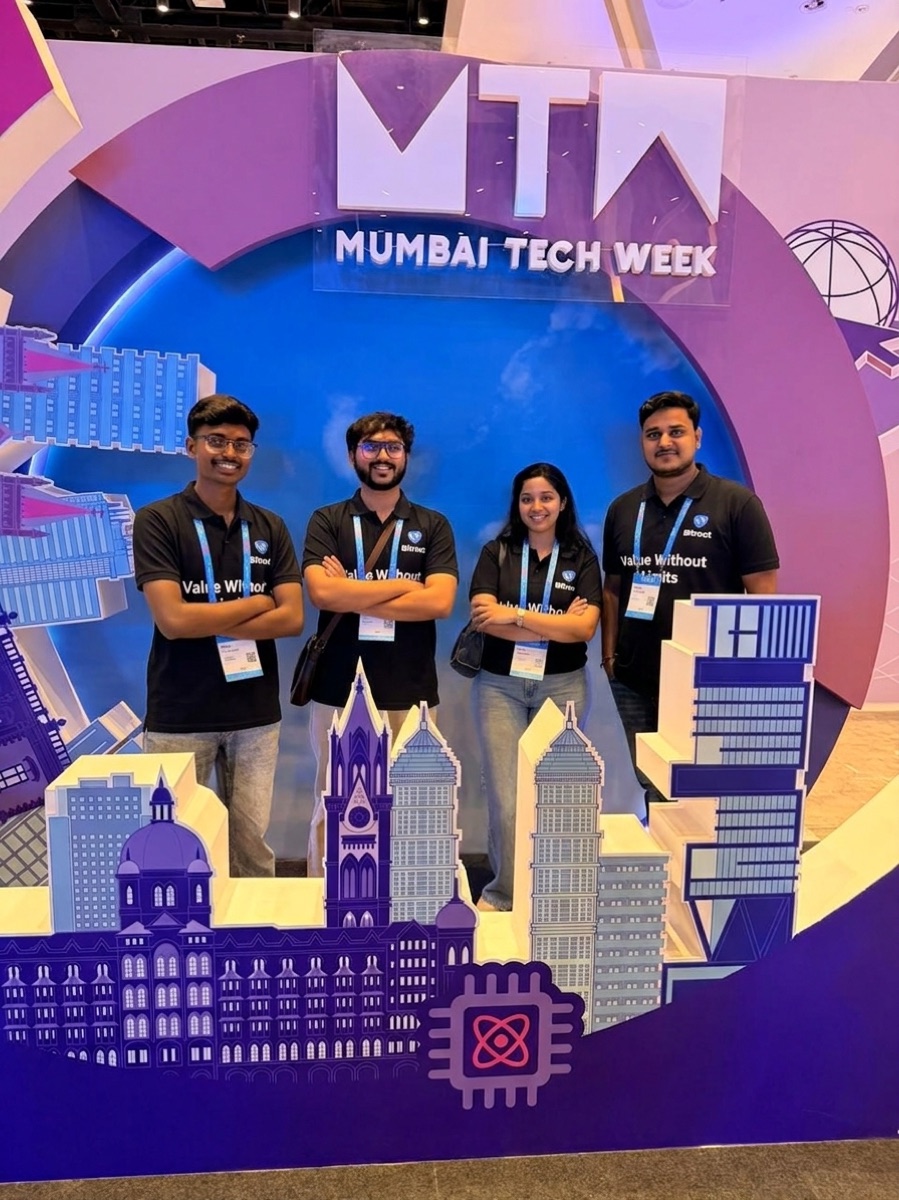
We walked into Mumbai Tech Week expecting to learn about new products. We walked out thinking about markets.
Most events are built to generate attention. MTW felt different. The value wasn't in the announcements or the keynote slides — it was in the signals underneath them. For two days, startups, enterprises, government bodies, creators, investors, and some of the biggest AI companies in the world shared the same floor. The result was less a tech showcase than a real-time snapshot of where the ecosystem is moving.
And the picture was clear: India is no longer preparing for the AI era. It's already operating inside it.
The presence that said everything
Some companies change the meaning of an event just by showing up. When OpenAI, Anthropic, Meta, and other global AI leaders are in the same room, it sends a message — India matters. Not as an emerging market or a future opportunity, but as a current priority.
For years the script was familiar: India built the talent, the West built the products, India adopted technology while others defined it. That narrative is out of date. India is becoming one of the most important markets shaping how AI gets adopted, deployed, and integrated into real businesses. The question is no longer when India catches up — it's what happens when the world's largest AI companies treat India as a core market from day one.
India's advantage is no longer just talent
India's tech story has always been framed around talent: large engineering pools, strong technical education, cost-effective execution. That still matters. But the bigger advantage today is ecosystem maturity.
At MTW, government bodies sat alongside startups, and enterprise leaders shared space with creators and investors. These groups weren't operating in silos — they were interacting directly, and innovation accelerates when they learn from one another. The strength of an ecosystem isn't how many companies it holds; it's how effectively they exchange knowledge, resources, and opportunities. By that measure, India isn't catching up in this AI cycle. It's helping define it.
AI is becoming infrastructure
A few years ago, adding AI to a product was a differentiator. Today it's table stakes.
Customers care less about whether a product uses AI and more about whether it's better because of it. Intelligence is being embedded into products and workflows rather than bolted on as a feature. So the opportunity is no longer adoption — most companies have already experimented. It's operationalization: making AI part of everyday workflows, sharpening decisions, reducing friction at scale. The companies that stand out won't use the most AI. They'll integrate it best.
The biggest barrier isn't technology
One of the most interesting conversations at MTW wasn't about model performance. It was about trust.
Adoption rarely stalls because the technology isn't capable enough. It stalls because people don't trust it enough — to run critical workflows, to rely on the outputs, to handle sensitive data. Capability, access, and cost keep improving; trust is the harder problem. That's why secure environments, controlled deployments, and governance are becoming so important. Enterprise AI won't be decided by who builds the smartest models, but by who builds the most trusted systems around them.
The best booths didn't feel like booths
The most crowded spaces had one thing in common: people weren't being presented to. They were participating — testing products, exploring features, experiencing the technology firsthand.
Product discovery is becoming self-serve. People want to feel the value before they hear the pitch, and the faster they understand a product by using it, the faster adoption follows. Technology is getting more interactive, marketing more experiential, and the line between them keeps blurring.
What tech events are actually becoming
Traditional conferences were built around announcements. The next generation will be built around signals — about markets, adoption, and where innovation is happening.
The most valuable takeaway from MTW wasn't any single launch. It was the collective direction of the ecosystem. When startups, enterprises, governments, investors, creators, and global AI leaders fill the same room, patterns emerge — and those patterns are often worth more than any announcement. MTW mattered not because it showed where technology is today, but because it revealed where it's going. And if the signals are right, India's role in the AI economy is no longer defined by participation. It's defined by influence.
— The Bitroot team, on the floor at Mumbai Tech Week.