For years, browsers competed on one thing: speed.
Google Chrome became the default because it was fast, reliable, and supported nearly every website. Safari doubled down on tight integration with Apple's ecosystem.
That formula is changing.
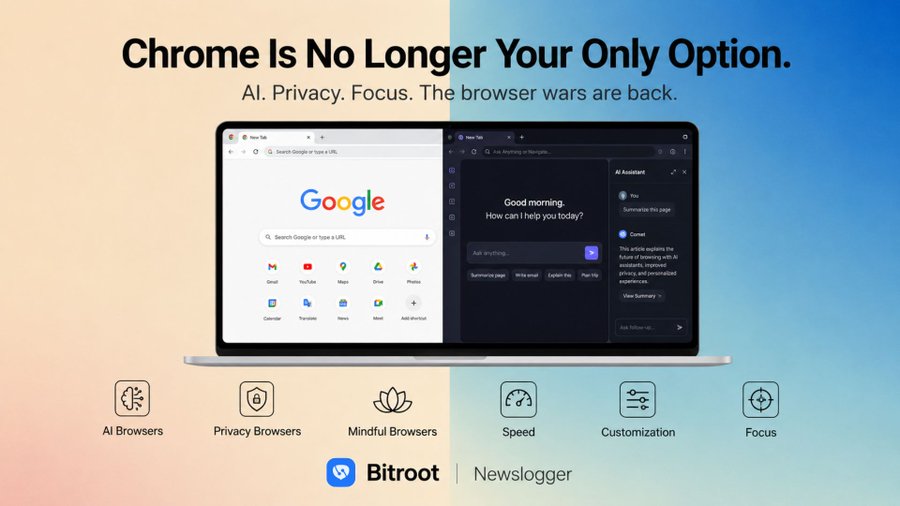
A new generation of browsers isn't trying to load webpages faster. Instead, they're solving entirely different problems. Some bring AI directly into your workflow. Others put privacy first. A growing category even focuses on reducing digital distractions and helping users stay productive.
If you're wondering whether it's finally worth moving beyond Chrome or Safari, here's what each new browser offers—and who it's actually built for.
Why Are People Looking Beyond Chrome And Safari?
Traditional browsers were designed for browsing the web.
Today's users expect much more.
Research now happens alongside AI. Workflows span dozens of tabs. Privacy concerns continue to grow. Many people also want browsers that match how they work rather than forcing everyone into the same experience.
Instead of competing with Chrome on speed, newer browsers are competing on purpose.
- Some are built for AI.
- Some are built for privacy.
- Some are built for focus.
That's why the browser market suddenly feels exciting again.
The Best AI Browsers In 2026
Dia
What it is
Dia is an AI-first browser designed to bring an assistant directly into the browsing experience. Instead of constantly switching between webpages and ChatGPT, users can interact with AI inside the browser itself.
Why it stands out
It treats AI as part of browsing rather than an external tool.
Bitroot Take
Dia feels less like a browser and more like an AI workspace. If your day revolves around researching, writing, and summarizing information, it's one of the most compelling Chrome alternatives today.
Comet
What it is
Comet is Perplexity's AI-powered browser that combines search, browsing, and conversational assistance into a single experience.
Why it stands out
Rather than returning links alone, it helps users understand information while browsing.
Bitroot Take
Comet challenges Google's biggest strength, search. If Perplexity can make AI-assisted browsing faster than traditional search, Chrome has a serious competitor.
Opera Neon
What it is
Opera Neon combines AI capabilities with automation, allowing users to generate content and complete tasks directly inside the browser.
Why it stands out
It focuses on reducing repetitive work instead of simply displaying webpages.
Bitroot Take
Neon isn't trying to be another browser. It's trying to become an AI-powered productivity tool that happens to browse the web.
Atlas
What it is
Atlas is built around AI-assisted browsing, helping users interact with online content more efficiently.
Why it stands out
It emphasizes smarter navigation rather than adding more browser features.
Bitroot Take
Atlas represents a growing trend: browsers that help users complete tasks instead of just opening tabs.
The Best Privacy Browsers
Brave
What it is
Brave blocks trackers and advertisements by default while giving users greater control over their browsing data.
Why it stands out
Privacy comes built in rather than being an optional setting.
Bitroot Take
Brave has evolved from a niche privacy browser into one of the strongest Chrome alternatives for users who value speed and security equally.
DuckDuckGo Browser
What it is
Built by the privacy-focused search engine, DuckDuckGo Browser minimizes tracking and simplifies private browsing.
Why it stands out
Its experience is designed around collecting as little user data as possible.
Bitroot Take
If Google knows too much about your browsing habits, DuckDuckGo offers one of the cleanest escapes.
Vivaldi
What it is
Vivaldi focuses heavily on customization, allowing users to tailor almost every aspect of the browsing experience.
Why it stands out
Power users can build workflows that simply aren't possible in Chrome.
Bitroot Take
Vivaldi proves that personalization doesn't always need AI. Sometimes giving users complete control is enough.
Ladybird
What it is
Ladybird is an independent browser engine aiming to reduce reliance on Chromium and WebKit.
Why it stands out
It represents a long-term effort to diversify the browser ecosystem.
Bitroot Take
Ladybird is less about today's features and more about tomorrow's web. An independent browser engine could become increasingly important as browser diversity shrinks.
The Rise Of Mindful Browsers
Perhaps the most surprising trend isn't AI.
It's browsers designed to improve how people spend time online.
Opera Air
Opera Air introduces features intended to promote focus and healthier browsing habits.
Bitroot Take
Instead of helping you consume more content, Opera Air tries to help you consume it more intentionally.
Zen Browser
Zen Browser focuses on minimalism, cleaner workflows, and reducing unnecessary distractions.
Bitroot Take
Zen isn't competing with Chrome's feature list. It's competing with Chrome's complexity.
SigmaOS
SigmaOS replaces traditional tab overload with a workspace-style browsing experience designed for productivity.
Bitroot Take
SigmaOS feels like Notion and a browser merged together. It's ideal for professionals juggling research, meetings, and multiple ongoing projects.
Browser Comparison: Which One Should You Choose?
| Browser | Best For | AI | Privacy | Productivity |
|---|---|---|---|---|
| Chrome | Everyday browsing | ⭐⭐ | ⭐⭐ | ⭐⭐⭐ |
| Dia | AI workflows | ⭐⭐⭐⭐⭐ | ⭐⭐ | ⭐⭐⭐⭐ |
| Comet | AI search | ⭐⭐⭐⭐⭐ | ⭐⭐ | ⭐⭐⭐⭐ |
| Brave | Privacy | ⭐⭐ | ⭐⭐⭐⭐⭐ | ⭐⭐⭐ |
| Vivaldi | Customization | ⭐⭐ | ⭐⭐⭐⭐ | ⭐⭐⭐⭐ |
| Opera Air | Mindful browsing | ⭐⭐ | ⭐⭐⭐ | ⭐⭐⭐⭐ |
| Zen Browser | Focus | ⭐⭐ | ⭐⭐⭐ | ⭐⭐⭐⭐⭐ |
| SigmaOS | Productivity | ⭐⭐⭐ | ⭐⭐⭐ | ⭐⭐⭐⭐⭐ |
(⭐ Ratings reflect Bitroot's editorial opinion and are intended for comparison only.)
Should You Switch From Chrome?
Not necessarily.
Chrome remains one of the fastest, most reliable, and best-supported browsers available.
But if your work revolves around AI, privacy, or productivity, many of these newer browsers offer experiences Chrome was never designed to provide.
Rather than replacing Chrome completely, many users may find themselves choosing different browsers for different tasks.
Final Verdict
Chrome optimized browsing for websites.
The new generation of browsers is optimizing browsing for people.
Whether that's AI assistance in Dia and Comet, stronger privacy in Brave, or distraction-free workflows in Zen Browser and SigmaOS, today's browsers are no longer competing on speed alone.
They're competing on how well they fit the way people actually work.
The browser wars are back, but this time, winning isn't about opening the web faster.
It's about helping users get more done once they're there.
Frequently Asked Questions
What are the best Chrome alternatives in 2026?
Some of the strongest alternatives include Dia, Comet, Brave, Vivaldi, Zen Browser, Opera Air, SigmaOS, and DuckDuckGo Browser. Each focuses on a different user need, from AI assistance to privacy or productivity.
Which browsers use AI?
Dia, Comet, Opera Neon, and Atlas integrate AI directly into the browsing experience, helping users search, summarize, write, and automate tasks without constantly switching applications.
Are privacy browsers worth switching to?
If online tracking and data collection are concerns, browsers like Brave and DuckDuckGo offer meaningful privacy improvements over traditional browsers.
What is a mindful browser?
Mindful browsers such as Opera Air and Zen Browser are designed to reduce distractions, improve focus, and create a calmer browsing experience rather than maximizing engagement.
Can AI browsers replace Chrome?
Not yet. Chrome remains the dominant browser, but AI-first browsers are becoming compelling alternatives for users who spend significant time researching, writing, or working with AI tools.