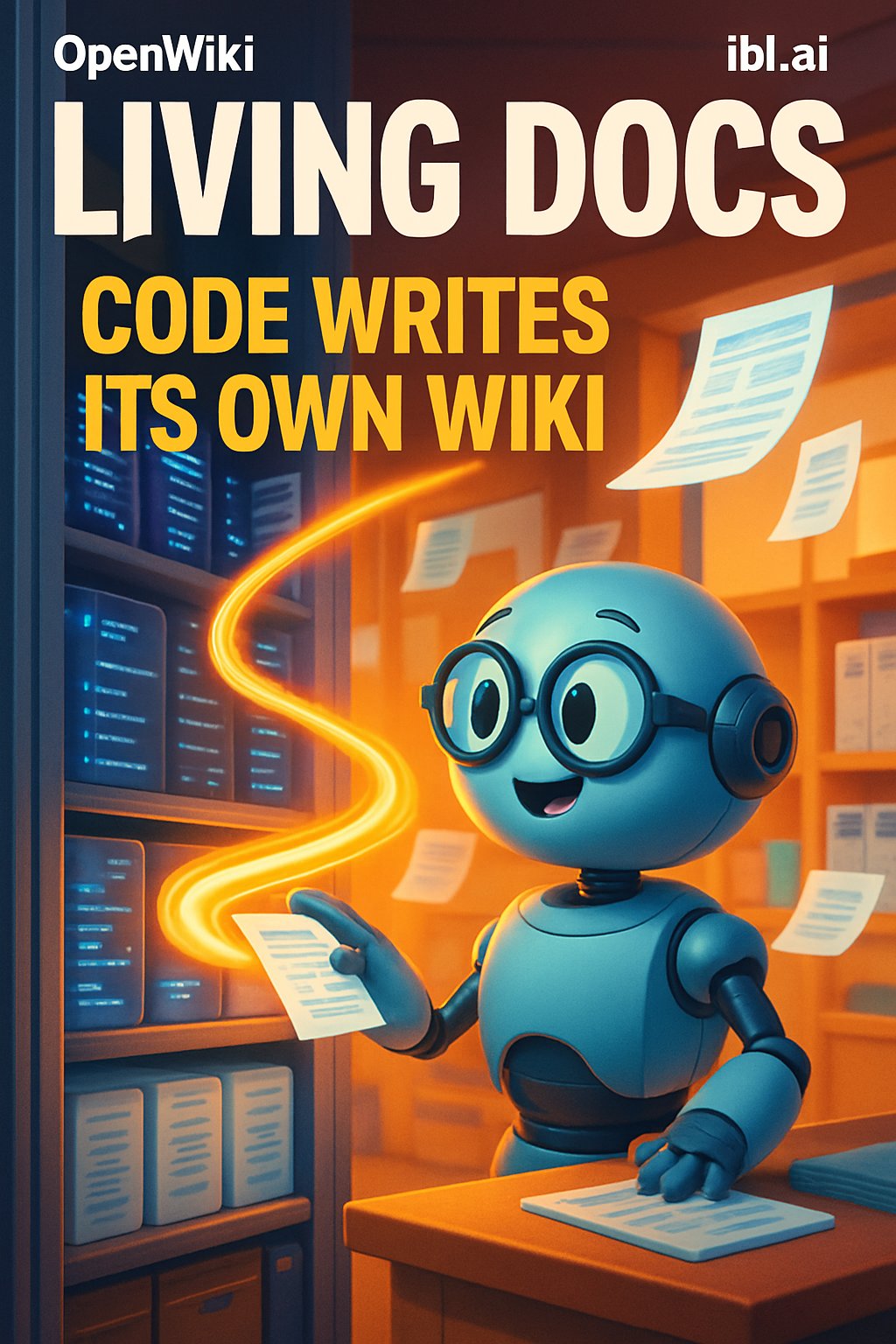
LangChain announced OpenWiki, an open‑source agent that scans your codebase on each push and regenerates a markdown wiki that reflects the latest state of the repository. The tool hooks into your CI pipeline and produces a living document without manual effort.
How OpenWiki works
OpenWiki leverages LangChain’s agent framework to parse source files, extract symbols, and build a hierarchical view of modules, classes, and functions. The generated wiki is committed back to a designated docs folder, so the latest version is always available in the same repo. Because it runs as part of the CI step, the wiki stays in sync with every merge.
Benefits for startup engineers
The claim is that engineers waste roughly 30 % of their time searching for information that should already be documented. By automating the wiki, teams can free that time for feature work and reduce onboarding friction. The agent also produces cross‑references and example usage snippets, which can be useful for newcomers.
Caveats and trade‑offs
OpenWiki’s usefulness depends on the quality of your code comments and naming conventions; poorly documented code can still lead to noisy or incomplete wiki pages. The CI step adds extra compute time—roughly a few seconds per build for modest repositories—so very large monorepos could see noticeable pipeline slowdowns. Additionally, the generated wiki lives in the same repo, which may raise concerns about merge conflicts if multiple branches update docs simultaneously.
When to try it
If your team already runs LangChain agents or has a CI pipeline that can afford a modest extra step, spin up OpenWiki on a non‑critical branch to evaluate the relevance of the generated content. Watch for false positives in the wiki and measure any increase in build time before rolling it out to production.
What to watch
Keep an eye on the upcoming releases for support of private repositories and configurable update frequencies, which will help address the current limitations around large codebases and noisy output.