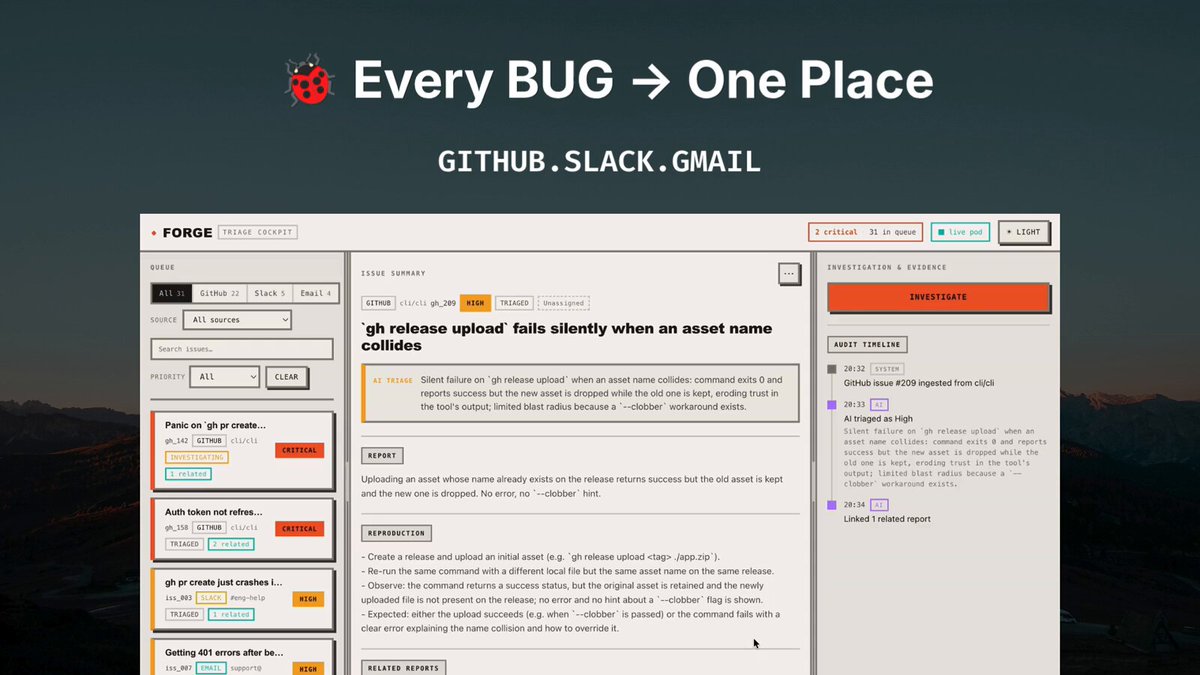
Craig Ruks announced that his "Shep" agent orchestrator is now open source after a May internal rollout. The tool watches GitHub repositories for issues labeled shep and forwards them to a configurable agent pipeline, letting teams experiment with automated triage or custom workflows without building a full bot from scratch. The announcement came via a tweet that also included a playful dog emoji.
How Shep works
Shep polls the GitHub Issues API for the shep label, then invokes a user‑supplied command or script with the issue payload. Because the orchestration layer is thin, you can plug in anything from a simple shell script to a large language model service. The project ships with a minimal Dockerfile and a sample Python agent that replies with a canned comment, illustrating the end‑to‑end flow.
When to consider it
Startups that already have a few GitHub‑based automation scripts may find Shep useful as a glue layer. It removes the need to embed polling logic in each script and provides a single point for logging and error handling. If you’re already using GitHub Actions, you can run Shep as a self‑hosted runner, keeping the architecture inside your existing CI budget.
Caveats and limits
Shep only reacts to the shep label, so you’ll need to adopt that convention across repos, which can add friction. The orchestrator does not include built‑in deduplication; rapid issue churn can generate duplicate agent runs unless you add your own guardrails. Also, because it’s a new open‑source project, community support is limited, and you’ll be responsible for security hardening of any downstream agents you attach.
What to watch
If you have a handful of internal bots that already read GitHub issues, try pointing them at a sandbox repo with the shep label this week. Monitor the volume of agent invocations and the noise level in issue comments; a high false‑positive rate may indicate you need tighter labeling or smarter filtering before scaling.