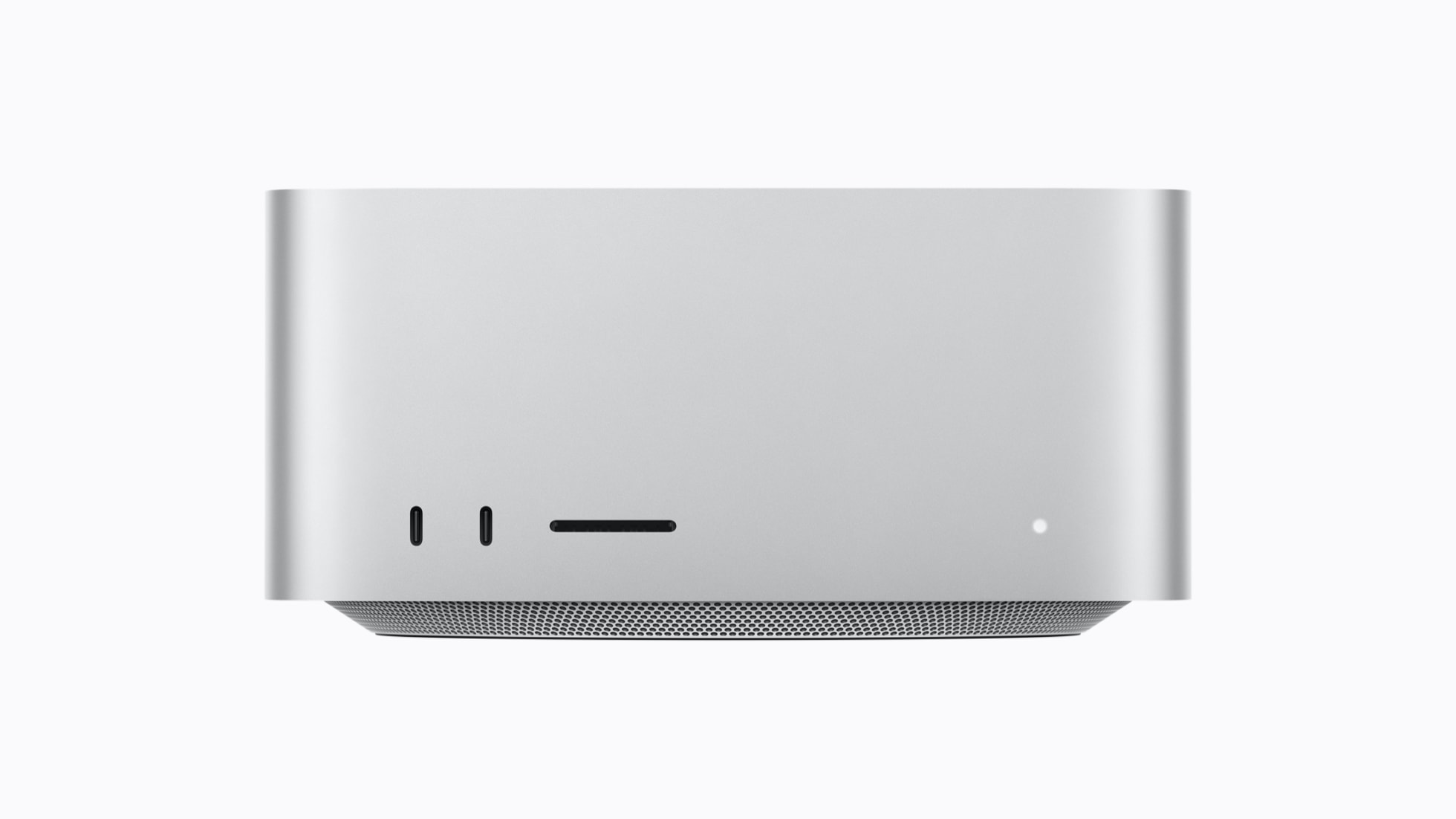
Apple announced Mac Studio with up to 512GB unified memory and M5 Ultra chips.* The specs are impressive. But for founders, there's a more important implication: You can now run capable models locally—open-source alternatives like DeepSeek and LLaMA that previously required expensive GPU infrastructure. The question is: Should you?
*Source: Apple Mac Studio newsroom
For the last two years, building with AI meant one thing for most startups: cloud APIs. OpenAI's GPT, Google's Gemini, Anthropic's Claude. You integrate the API, pay per request, and accept dependency on a cloud provider's infrastructure, rate limits, and pricing power.
That dependency has costs. Visible ones (API fees). Hidden ones (lock-in, lost control, vulnerability to price increases).
Mac Studio offers an alternative. For the first time, an off-the-shelf machine can run cutting-edge models locally. DeepSeek R1 for reasoning. Open-source LLaMA and Mistral variants for coding and general tasks. Models that previously required expensive GPU infrastructure or API subscriptions.
But switching to local inference isn't free either. It trades API costs for hardware costs, cloud vendor lock-in for hardware lock-in, and simplicity for complexity.
Here's the decision framework founders should use.
The Current Cloud API Model (And Its Costs)
Right now, most founders building with AI follow this pattern:
- Integrate API. Add OpenAI SDK or similar to your codebase.
- Pay per request. Each API call costs money. Scale grows cost proportionally.
- Accept dependency. Your product depends on OpenAI's uptime, rate limits, and pricing.
- Lose control. The model you use is whatever OpenAI decides to deploy. You can't customize or own the model. The economics look like this:
For a mid-stage startup making 1M API calls per month (approximate costs vary by model tier): - OpenAI GPT-4: ~$30K–$50K/month - Google Gemini: ~$20K–$35K/month - Anthropic Claude: ~$15K–$30K/month See current pricing: OpenAI pricing, Google AI pricing, Anthropic pricing
The hidden costs:
Beyond per-request pricing, there are lock-in costs: - Rate limits force architecture decisions - API changes require code rewrites - Price increases are mandatory—no negotiating power - Vendor switching means rebuilding integrations - Your product's performance depends on provider uptime This is why API providers offer free tiers. They're not generous. They're locking you in early, so by the time costs matter, switching is expensive.
The Local Inference Alternative (And Its Trade-Offs)
Mac Studio with M5 Ultra and 512GB unified memory changes the math.
What you can run locally: - LLaMA 70B (fits entirely in 512GB) - Mixtral 8x22B (multi-expert model, fits locally) - Smaller specialized models (medical, code, search) The economics:
Mac Studio M5 Ultra: ~$15K upfront.
Cost per inference: Near zero (just electricity).
Break-even analysis:
If your API costs are $20K+/month, Mac Studio pays for itself in one month. After that, it's almost free.
But the trade-offs are real:
- Upfront capital. You pay $15K before you save anything. Cloud APIs have zero upfront cost.
- Latency. Local inference avoids network round-trip delays, often making it faster than cloud APIs. But cloud APIs with optimized infrastructure can match or exceed local speed for specific workloads. The tradeoff depends on your implementation details, not inherently on local vs. cloud.
- Model flexibility. You're committed to open-source models (LLaMA, Mixtral). Frontier closed-source models (GPT-5.6, Claude Opus) still require APIs.
- Operational complexity. You now manage model updates, versioning, performance tuning. APIs handle that for you.
- Scalability limits. Mac Studio has finite compute. If you need to scale beyond its capacity, you're adding more machines (coordination complexity).
- Hardware maintenance. Mac breaks, you've lost inference. APIs have redundancy built in.
When Local Inference Makes Sense
Go local if:
- Your monthly API costs exceed $10K+ (payback period < 2 months)
- Your inference needs are predictable (stable query volume)
- You can tolerate model constraints (open-source vs. frontier)
- Your latency requirements are modest (< 2-5 seconds acceptable)
- You have technical capacity to manage the infrastructure
When API Lock-In Is Worth Keeping
Stay with APIs if:
- Monthly costs are under $5K (hardware costs exceed benefit)
- You need frontier model capabilities (GPT, Claude Opus at state-of-the-art)
- Latency is critical (real-time inference required)
- You lack technical depth for infrastructure management
- Unpredictable scaling is common (spiky traffic)
The Lock-In Shift (Not Escape)
Here's what founders should understand: Switching from cloud API lock-in to local inference isn't freedom. It's trading one lock-in for another.
Cloud API lock-in: - Vendor controls pricing - You depend on their uptime - Model choices are theirs - Switching costs are high Hardware lock-in (Mac Studio): - Apple controls hardware - You depend on device reliability - Model choices are limited (open-source only) - Switching costs are high (sunk capital) You're not escaping lock-in. You're choosing which lock-in serves your economics better.
The Real Advantage: Negotiating Power
The actual benefit of local inference isn't freedom. It's leverage.
Once you have the option to run inference locally, cloud providers know you can leave. That changes the negotiating dynamic. You can demand better pricing, better terms, better support.
OpenAI, Google, and Anthropic have to compete not just against each other, but against the option of self-hosting.
That's where the value is. Not in fully escaping APIs, but in having an escape hatch credible enough that vendors take you seriously.
The Decision
Mac Studio's 512GB unified memory is significant. For the first time, serious founders can make a real economic case for local AI inference.
But it's not an automatic win. The decision depends on your specific economics:
- API costs (how much are you currently paying?)
- Model requirements (do you need frontier models or can you use open-source?)
- Latency tolerance (how fast does inference need to be?)
- Scale trajectory (will local capacity become a bottleneck?) Answer those questions honestly, run the math, and you'll have clarity.
For many founders, local inference makes sense. For others, API lock-in remains the pragmatic choice.
The important thing is understanding what you're choosing and why.
For more on infrastructure strategy and vendor lock-in dynamics, visit Bitroot.