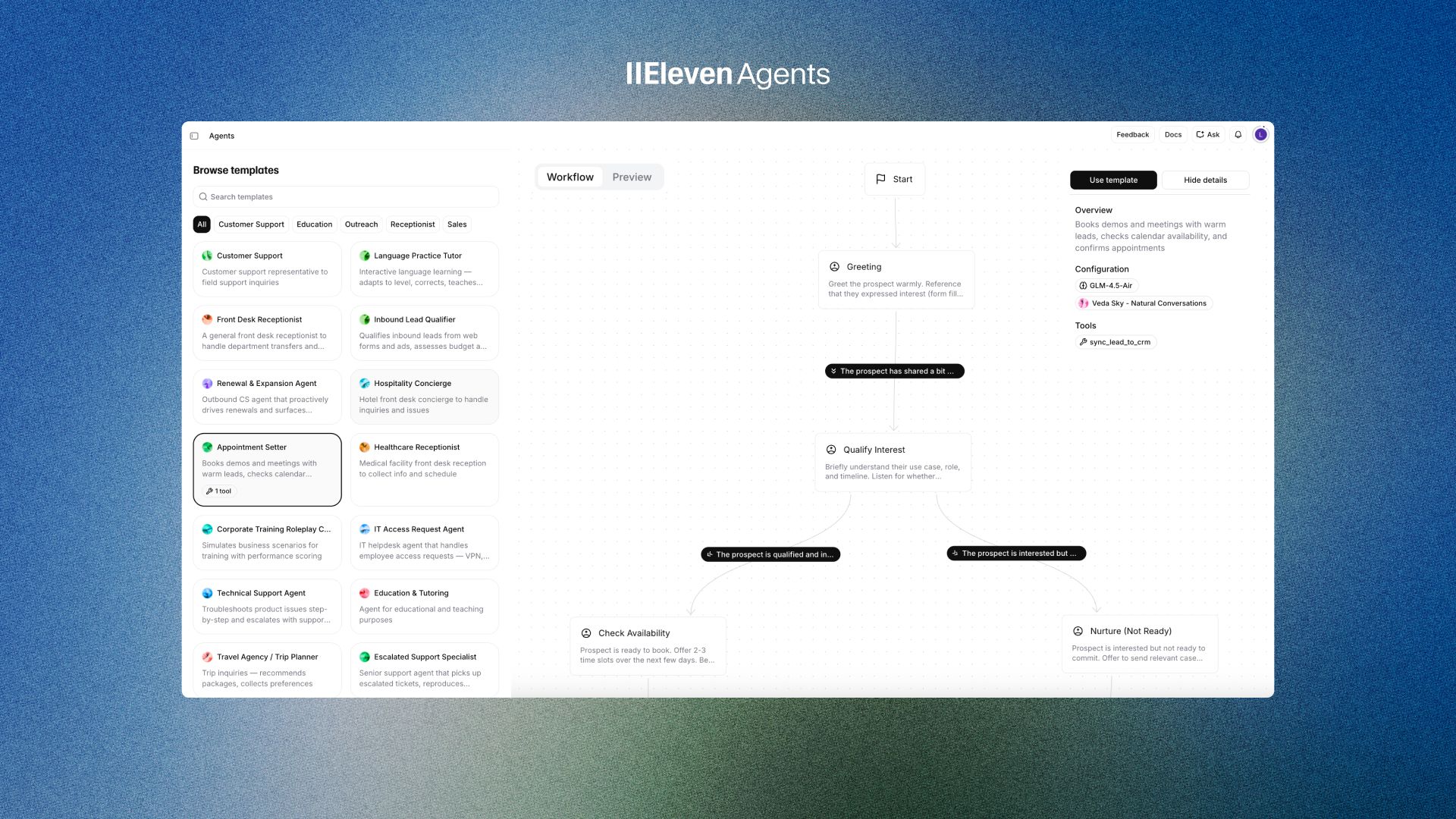
ElevenLabs announced a library of Agent Templates that ships with over 50 pre‑configured ElevenAgents, each bundled with prompts, workflows, and integrations for common business functions such as support, sales, and operations source.
Ready‑made agents for everyday tasks
The templates are meant to be drop‑in replacements for custom‑built agents. Each includes a prompt tuned for the target use case, a workflow that stitches together API calls, and optional connectors to popular SaaS tools. For a startup that already uses ElevenLabs' voice‑AI, the templates can cut weeks off a development cycle.
Integration and friction points
ElevenAgents run on the same platform as ElevenLabs' text‑to‑speech service, so you can call them from existing SDKs or via HTTP. However, the templates assume you have an active ElevenLabs subscription that includes the Agents feature; the pricing tier for this capability has not been disclosed publicly. If you are on a free or low‑tier plan, you may hit usage caps or need to upgrade before the templates become usable.
Caveats and trade‑offs
While the templates promise quick value, they are generic. The predefined prompts may produce noisy or overly verbose output in niche domains, requiring you to tweak them anyway. Moreover, because the templates are hosted on ElevenLabs' platform, you are locked into their runtime environment and cannot self‑host the agents without an enterprise agreement.
When to try it
If you already have ElevenLabs voice or language services in production and need a fast way to prototype an internal chatbot or support bot, spin up a template in a sandbox and measure latency and cost over a week. If the results are stable and the pricing fits your budget, consider migrating a pilot to production.
What to watch: ElevenLabs will likely roll out pricing details and additional templates in the next few weeks; keep an eye on their announcements to decide when the cost‑benefit balance improves.