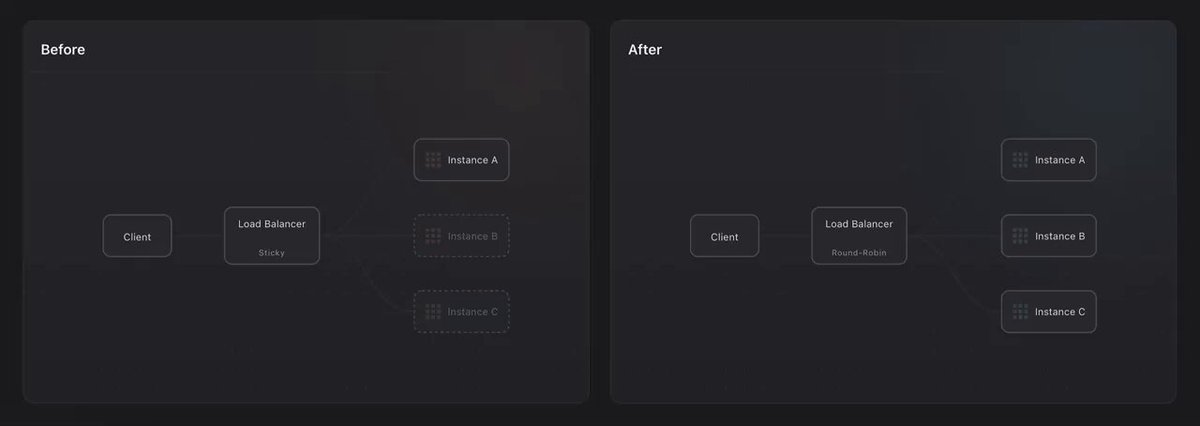
MCP’s latest update removes built‑in session state, turning the service into a pure‑stateless component. The change was announced in a tweet by ClaudeDevs, noting that the new model lets you deploy on serverless or edge infrastructure and scale horizontally behind any load balancer (source).
What changed
Previously, each MCP instance kept its own session data, which forced operators to run a single long‑lived server or a tightly coupled cluster. The stateless redesign externalizes all state, making each request independent. In practice, you can now launch MCP as an AWS Lambda, Cloudflare Worker, or any container‑less runtime without worrying about sticky sessions.
How it works
Statelessness means the service expects callers to supply any needed context (e.g., auth tokens, request IDs) on every call. Persistent data must live in a separate store such as DynamoDB or Redis. Because there is no in‑process memory to maintain, the runtime can be replicated instantly, and a load balancer can route traffic arbitrarily.
Implications for startups
- Cost flexibility – Serverless pricing is usage‑based, so you only pay for the compute you actually consume. This can be cheaper than keeping a dedicated VM running 24/7, especially for bursty workloads.
- Operational simplicity – No need to manage session replication or graceful shutdown scripts. Deployments become a single CI/CD artifact.
- Scalability – Horizontal scaling is now a matter of increasing the request concurrency limit on your platform, without custom load‑balancer tricks.
Cautions and next steps
Statelessness also shifts responsibility. If your existing MCP usage relied on implicit session caching, you’ll need to refactor to store that data externally, which can add latency and cost. Moreover, the lack of built‑in session affinity means mis‑configured load balancers could generate duplicate work. Test the new deployment in a staging environment and monitor latency spikes before a full rollout.
When to try it – If your team already uses serverless functions for other services, spin up a trial MCP instance behind your existing API gateway and compare request latency and cost against the legacy setup. This will reveal whether the operational benefits outweigh the added complexity of external state management.