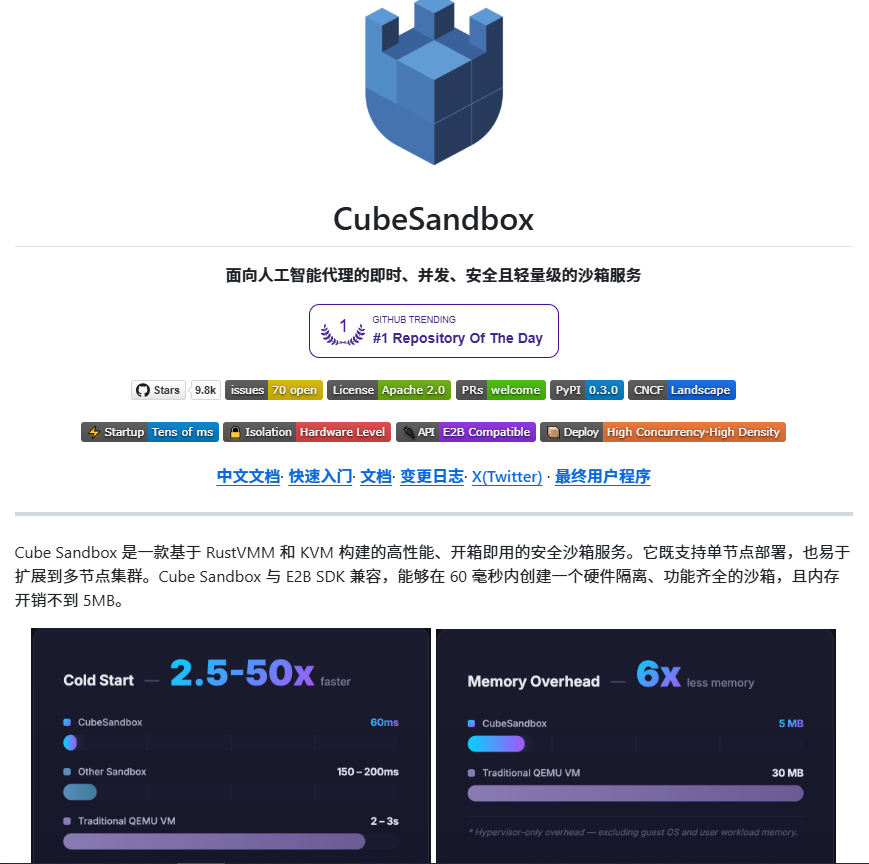
Tencent Cloud just open‑sourced CubeSandbox, a RustVMM‑based sandbox for AI agents that claims a cold‑start latency of 60 ms and under 5 MB memory per instance, as announced on X (source tweet). The project is released under Apache 2.0 and mirrors the E2B SDK protocol, making it drop‑in compatible with existing agent frameworks.
Light‑weight isolation for many agents
CubeSandbox packs each sandbox into less than 5 MB of RAM, which the tweet says lets a single host run “several thousand” agents simultaneously. For startups that spin up dozens of short‑lived workers, the RAM savings can translate into lower cloud bills.
Near‑instant startup and low overhead
The reported cold‑start time is 60 ms, effectively eliminating the wait between an agent’s request and the execution environment. In practice that means tool‑invocation latency is dominated by network I/O rather than container spin‑up.
Compatibility and licensing
The sandbox implements the same protocol as the popular E2B SDK used in overseas projects, so existing code that talks to an E2B endpoint can point at a CubeSandbox instance without changes. Being Apache 2.0‑licensed removes legal friction for commercial use.
Caveats and when to experiment
CubeSandbox is brand‑new and the only public documentation lives in the GitHub repo (CubeSandbox). It requires a Rust toolchain to build, which may add friction for teams accustomed to Docker‑only workflows. The “hardware‑level isolation” is strong, but the sandbox’s security model has not been independently audited, so you may see false‑positive alerts or edge‑case escapes in a hostile environment. Start with a non‑production pilot to verify stability and monitor resource usage.
What to watch – Keep an eye on issue activity in the CubeSandbox repo and any community wrappers for the E2B SDK. If the project gains traction, it could replace heavier container solutions for high‑throughput agent fleets.