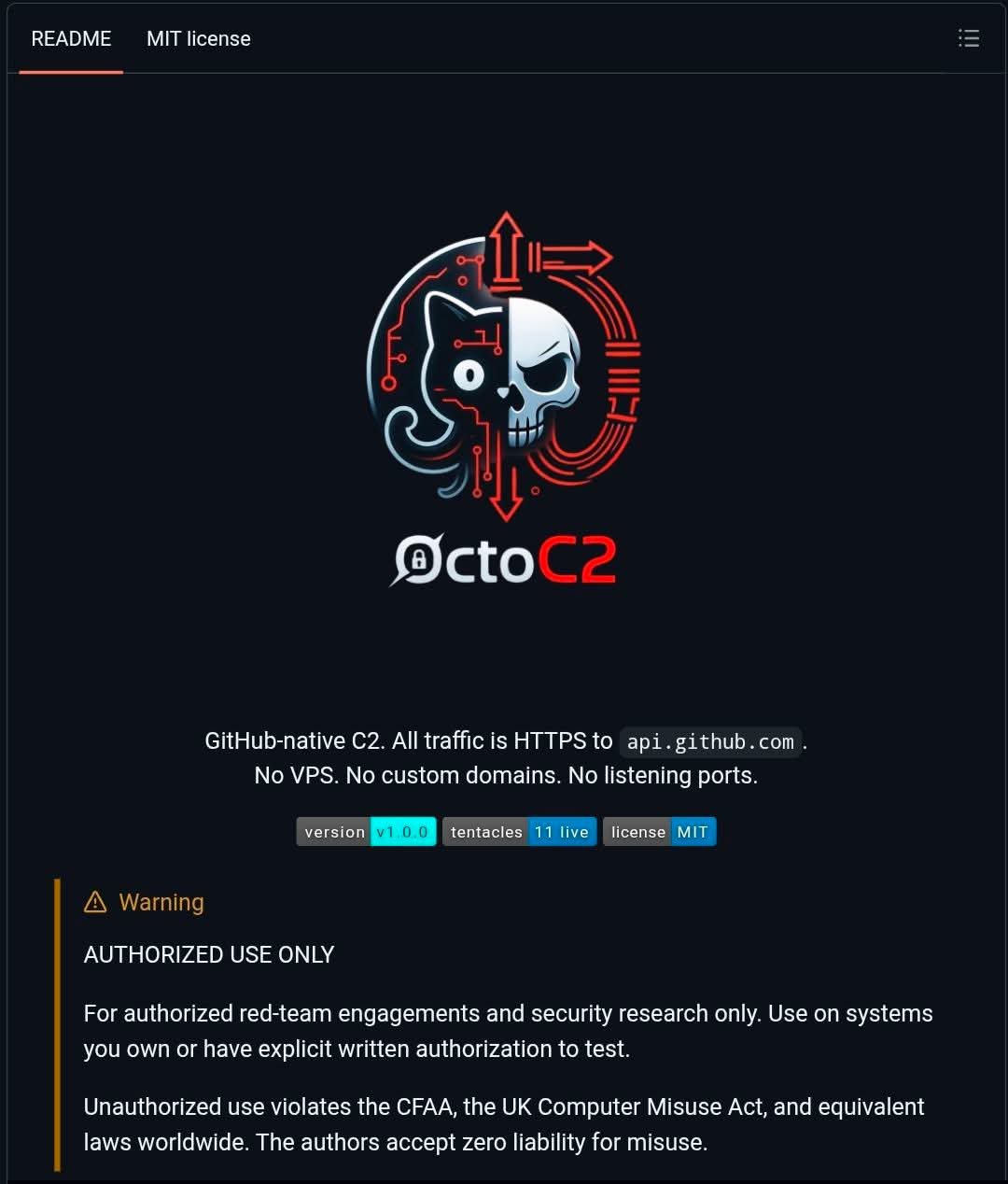
OctoC2, a new command‑and‑control (C2) framework, lives entirely inside GitHub and its beacon communicates only with http://api.github.com over HTTPS — the same traffic every developer generates daily. The project is open‑source on GitHub at OctoC2.
Architecture in a nutshell
OctoC2 embeds the C2 logic in a GitHub repository. The attacker’s payload pulls configuration and commands by making standard API calls to api.github.com. No VPS, custom domain, or listening server is required, which reduces the surface area for network‑level detection. Because the traffic blends with legitimate GitHub activity, traditional port‑based firewalls see nothing unusual.
Benefits for red‑team operators
- Zero infrastructure – you can spin up a C2 channel with a single repo, saving time and cost.
- HTTPS only – all communication is encrypted and indistinguishable from normal developer traffic.
- Rate‑limit awareness – the framework respects GitHub’s public API limits, avoiding accidental bans.
Caveats and risks
- Rate‑limit constraints: Heavy command traffic can hit GitHub’s unauthenticated limits (60 req/min) or authenticated limits (5,000 req/hr). Operators must throttle beacons or use multiple tokens.
- Detection via behavioral analytics: Security teams that monitor anomalous GitHub API usage may flag the pattern as suspicious, especially if the repo is public.
- Vendor lock‑in: The framework’s reliance on GitHub’s API means it stops working if the target blocks GitHub or if the API changes.
- False positives: Normal CI/CD pipelines also poll the API, so distinguishing malicious beacons can be noisy.
When to try OctoC2
If you need a quick, low‑cost C2 channel for a short engagement and you’re comfortable managing API rate limits, clone the repo and run a test beacon against a disposable GitHub account. For longer‑running operations, evaluate the noise profile in your target environment before committing.
Source: tweet