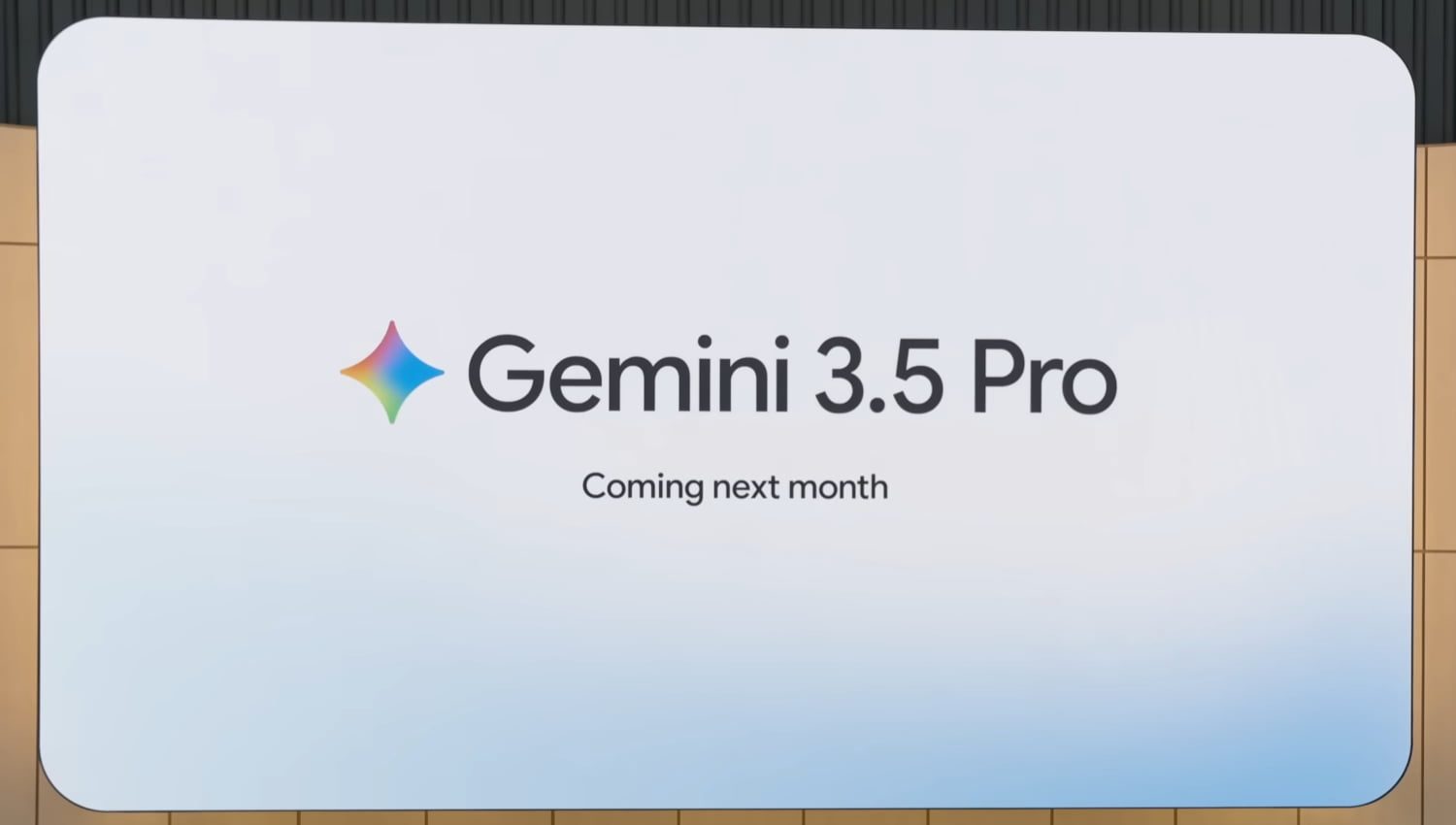
Google promised Gemini 3.5 Pro in June. It's now July, and the flagship model still isn't live. The company released three lightweight alternatives (Gemini 3.6 Flash, Gemini 3.5 Flash-Lite, Gemini 3.5 Flash Cyber) to keep developers engaged. But the model everyone is waiting for—the one that's supposed to compete with Claude Opus 4.8 and GPT-5.5—remains in testing.
The reason: coding performance. Bloomberg reported that Google reset its training data in late June to improve Gemini 3.5 Pro's ability to generate and debug code. The results were disappointing. In a competitive moment where code generation has become the most valuable AI use case for enterprise, Google's flagship is lagging behind competitors.
This isn't just a delay. It reveals something about how Google's AI strategy is shifting, why that strategy might be working or not, and what it means for developers choosing between Claude, OpenAI, and Gemini.
The Promise and the Miss
In May 2026, CEO Sundar Pichai announced Gemini 3.5 Pro at Google I/O. The company said the model was already in internal use and would roll out in June. The message was clear: the flagship was ready, just pending final polish.
It wasn't ready. Gemini 3.5 Pro never shipped in June. As of July 21, 2026, it still hasn't shipped. Google's statement: the model is "being tested with partners and would be coming 'soon.'" No timeline. No specific date. In the language of delayed software products, "soon" means "we don't know."
This matters because coding has become the primary use case for enterprise AI adoption. Software developers use AI to write new code, debug existing code, refactor legacy systems, and automate repetitive tasks. Performance here is measured on benchmarks like SWE-Bench Verified, which tests a model's ability to actually resolve real GitHub issues from production repositories.
Claude Opus 4.8, Anthropic's flagship, scores 69.2% on SWE-Bench Verified—a benchmark that tests a model's ability to resolve real GitHub issues. Gemini 3.1 Pro, Google's current shipping flagship, lags behind on the same benchmark. The gap is meaningful enough that it influences enterprise adoption decisions.
Google wanted Gemini 3.5 Pro to close that gap or exceed Claude's performance. According to multiple reports, it didn't.
Why Coding Performance Matters (More Than Most Realize)
The coding performance gap isn't an academic benchmark argument. Here's why it's strategically critical:
First: It's a revenue problem. Enterprises adopting AI for software development are making multiyear commitments. They're building entire teams around tools like Claude Code, GitHub Copilot, or OpenAI's Codex. If Gemini's Pro model performs worse on coding tasks, those teams have less incentive to migrate. Google's path to enterprise AI revenue depends on convincing CIOs that Gemini is a credible alternative to Claude and OpenAI. A coding performance gap makes that pitch harder.
Second: Coding is where benchmarks transfer to business value. With general tasks (writing marketing copy, answering questions, summarizing documents), a 4-point benchmark gap might not matter in practice. But with coding, the gap is direct. A model that resolves 69% of GitHub issues will catch fewer bugs, require more manual review, and generate more technical debt than a model that resolves 65%. That's measurable impact on development velocity.
Third: Competitors know this. OpenAI has positioned GPT-5.5 explicitly for coding and professional workflows. Anthropic has built Claude Code as a developer-focused tool. Both companies have engineered their go-to-market strategies around the coding advantage. Google is now playing catch-up—and the delay suggests it's harder than Google expected.
What Went Wrong: The Training Data Reset
Bloomberg reported that Google updated the training data used for Gemini in late June to improve coding skills. This was a deliberate engineering decision: take the existing Gemini 3.5 architecture, feed it different training data (curated to improve coding performance), and hope the results improve.
They didn't. The internal results were disappointing enough that Google decided the model wasn't ready to ship.
This tells us something important. Google didn't have a data quality problem from the start. Google had a performance problem that existed even after targeted optimization. That suggests one of two things (or both):
- The coding capability is limited by architecture, not training data. Gemini 3.5's underlying model might not have the capacity or inductive bias needed to excel at coding tasks. No amount of better training data fixes that.
- Google's coding training data is less comprehensive than competitors. Google doesn't have the equivalent of GitHub's repository of millions of real-world coding projects in the way that Anthropic and OpenAI do. Anthropic was founded by former OpenAI researchers who understand LLM development; the company has likely optimized its training pipeline for coding performance longer than Google has. Either way, the reset-and-failure suggests this isn't a simple fix. Google will need more than better training data. It will need architectural changes, different training approaches, or both—all of which take time.
Why Google Released Flash While Pro Stalled
Here's the interesting strategic question: why did Google release Gemini 3.5 Flash (a lightweight model) on schedule in May while letting Pro (the flagship) slip?
The answer reveals Google's actual competitive positioning.
Google is playing a two-tier strategy. The flagship (Pro) competes on raw capability with Claude and GPT-5.5. The lightweight (Flash) competes on cost and speed. Google is betting that it can dominate the second category even if it lags on the first.
This makes sense. Gemini 3.5 Flash is genuinely fast and cheap. Developers report that for high-volume, low-stakes tasks—customer service routing, content moderation, basic code generation—Flash performs acceptably at a fraction of Pro prices. Google has built pricing models around this tier, offering free access to Flash through Google AI Studio and aggressive enterprise pricing.
But the strategy has a risk: if Pro never ships, or ships underperforming, then Flash becomes the ceiling for what Gemini can do. Developers and enterprises will route complex tasks to Claude and GPT-5.5 out of habit. Gemini becomes the budget option, not the premium option.
That's a viable business strategy, but it's not the same as winning the frontier AI race.
The Coordination Problem: Organizational Fragmentation
Android Headlines identified a key issue: Google's AI organization is fragmented across research labs and product teams. When a model needs optimization for specific capabilities like coding performance, the question of who makes prioritization decisions—and how quickly they can align across teams—matters significantly.
This fragmentation might slow down how quickly Google can iterate compared to smaller, more focused organizations.
Large organizations face coordination challenges that smaller competitors don't. When optimization priorities diverge across research labs, the time to alignment and implementation compounds. The Gemini 3.5 Pro delay—where a late-June training reset still produced disappointing results—suggests that Google's internal coordination on this specific problem wasn't optimally efficient.
What the Delay Means for Developers
If you're a developer choosing an LLM API for coding, here's what the delay signals:
Claude Opus 4.8 remains the safest bet for production code. It has the highest SWE-Bench score (69.2%), which translates to a measurably higher success rate on real-world GitHub issues. It has the longest track record of developer feedback. The tooling (Claude Code) is designed specifically for multi-file refactors and complex debugging—the kind of work that enterprises actually pay for. For teams using Claude Code as a co-engineer on complex codebases, this gap compounds in practice. If coding quality is your priority and you're building production-grade systems, the gap is meaningful.
GPT-5.5 is a strong generalist alternative, particularly for teams with long-context workflows. It performs well on coding (around 65-68% SWE-Bench equivalent) but is architected for broader utility. Terminal workflows, long-document analysis, multi-step reasoning across different domains—GPT-5.5 handles these better than Claude. If your team is doing coding + data analysis + documentation automation + infrastructure-as-code in the same workflow, GPT-5.5 is worth the premium. The problem: it costs more, and you're paying for generalist capability you might not need.
Gemini remains the cost leader for high-volume tasks. Gemini 3.5 Flash delivers fast inference speeds at lower cost than frontier models. For high-volume, non-critical tasks—code review comments, boilerplate generation, test case scaffolding, code explanation—Flash performs acceptably. The free tier through Google AI Studio is genuinely unmatched. If your constraint is budget and you have time for occasional manual cleanup, Gemini Flash wins.
Gemini 3.5 Pro remains a question mark. Until it ships and publishes independent benchmarks, it's impossible to evaluate. If Pro ships at 69%+ SWE-Bench, it will be directly competitive with Claude and developers will have real choices. If it ships at 65-68%, it will be behind Claude but ahead of Gemini 3.1 Pro, positioning itself as a middle ground. The delay itself is the risk: it suggests internal uncertainty about the model's quality, which historically is a leading indicator that performance is closer to the lower bound than the upper bound.
India Advantage (Despite Pro Delay)
One overlooked aspect of Gemini's strategy is how it's positioned in emerging markets, particularly India. This is where Gemini's delay matters less than most think.
Gemini has several structural advantages in India that Claude and OpenAI don't:
1. Free API tier with meaningful usage. Gemini 3.5 Flash and Flash-Lite are completely free through Google AI Studio, with generous monthly quotas. Claude and OpenAI charge from the first token. For Indian developers and startups operating on tight budgets, that's a massive competitive advantage. A bootstrapped startup in Bangalore can build an AI-powered product on Gemini's free tier and only pay after they've raised funding or hit revenue.
2. Native rupee billing and UPI support. You can subscribe to Gemini and pay in Indian rupees via UPI. No international card required, no forex markup, no payment friction. Claude and OpenAI require international cards (American Express, Visa) or ACH transfers, both of which create friction in India's payment ecosystem. This isn't a small detail—it's the difference between "I can sign up in 2 minutes" and "I need to ask my startup's CFO to set up an international payment channel."
3. Mobile-first distribution. Gemini is integrated into Android and Google Search, which have 650+ million users in India. Most of India's AI adoption happens on mobile, not desktop. Claude and OpenAI are primarily web/API products. That distribution advantage is structural—it won't change because Gemini 3.5 Pro is late.
4. Developer ecosystem concentration. Approximately 45% of Claude usage in India is related to software development, suggesting a smaller but high-intent developer base. Google's broader user base includes many non-developers who are exposed to Gemini through Search and Android. Google is building an enormous funnel of developers who've already interacted with Gemini before they ever make an API choice.
The Gemini 3.5 Pro delay doesn't materially change these advantages. Developers in India will continue to prefer Gemini for prototyping and cost-sensitive workloads, regardless of whether Pro ships on schedule. Google is competing on a different axis in India than it is in the US or Europe—the question isn't "Is Gemini better than Claude?" but "Can I afford it without a credit card?"
What's Next
Google said Gemini 4 training has commenced as of the July press release. This is notable because it signals Google isn't stuck on Gemini 3.5 Pro—the company is already moving forward architecturally. But it raises a strategic question: if Pro isn't ready, why announce that 4 is in training?
Three possible interpretations:
First: Google is confident Pro will ship soon and is simply keeping the roadmap moving. This is the optimistic read. Google ships Pro in late July or early August, publishes benchmarks showing competitive performance, and then begins planning Gemini 4 for late 2026 or early 2027.
Second: Google has decided that waiting for Pro to reach 69%+ SWE-Bench is taking too long, and the company is hedging by pivoting to next-generation architecture. This suggests internal frustration—maybe the 3.5 architecture has a ceiling on coding performance, and Google needs to rethink the approach entirely rather than optimize training data further.
Third: Google is signaling confidence to the market despite internal uncertainty. Announcing Gemini 4 training makes it look like Google has a roadmap and momentum, even if Pro is stuck. This is a communication strategy more than an engineering reality.
The historical pattern matters here. Google has a track record of delayed AI launches (Bard took years longer than expected to launch). The company is also more cautious about releasing models that don't meet internal standards. This caution is good for safety but costly in a fast-moving market.
Most developer analysis suggests Pro will ship within the next 2-4 weeks. Google has staked public credibility on the launch (Pichai personally announced it). But in tech, "soon" often means "eventually," and there's no guarantee.
The Bottom Line
Google's Gemini 3.5 Pro delay isn't a catastrophe. It's a signal.
The signal is that building frontier-class LLMs is hard, and that Google's organizational structure makes it harder than it is for smaller, more focused competitors. It's a signal that coding performance is a critical differentiator, and that catching up after falling behind is expensive in terms of time and resources.
But it's not a signal that Google has lost the AI race. Google still has the world's best search infrastructure, the broadest distribution channel, and massive compute capacity. Gemini 3.5 Flash is genuinely competitive. The free tier is unmatched. In India and other emerging markets, Google's positioning is strong.
What the delay means is that Google is playing a different game than OpenAI and Anthropic. OpenAI is racing for frontier capability and using that to drive adoption. Anthropic is optimizing for developer trust and coding performance. Google is building for scale, distribution, and cost efficiency.
Those strategies are compatible. But they're different. And the delay reveals that Google's strategy is taking longer to execute than the company expected.
Related Reading
For more on how LLM pricing is reshaping competition in 2026, read our previous analysis: Google Gemini is now India's most competitively priced major AI platform, offering native rupee billing, UPI payment, and free API access that competitors don't provide.
Resources
- Bloomberg: Google Delays Gemini 3.5 Pro Over Coding Issues: Insider reporting on training data reset and disappointing results
- Search Engine Journal: Gemini 3.5 Pro Delayed Over Coding: Industry analysis and CEO statements
- Android Headlines: Google Delays Gemini 3.5 Pro: Corporate structure and employee perspective
- 9to5Google: Gemini 3.5 Pro Delays: Development timeline and strategy context
- Tech Insider: Claude vs ChatGPT vs Gemini 2026: Detailed benchmark and cost comparison
- Fenxi: GPT-5.5 vs Claude Opus 4.8 vs Gemini 3.1 Pro: Task-based routing logic and workload optimization
- Equity Research India: Google Gemini AI Pricing in India 2026: India-specific pricing, UPI billing, and free API tiers
Disclaimer
This analysis is based on publicly available reporting from Bloomberg, Search Engine Journal, 9to5Google, and Android Headlines; official Google statements; and published SWE-Bench benchmarks as of July 2026. All claims about the delay, training data reset, and employee sources are sourced from the resources listed above. This piece is analytical and interpretive—it examines the delay as a signal of competitive positioning and organizational challenges, but does not represent insider knowledge. Conclusions about Google's strategy are inferences based on observable actions and public statements, not confirmed by Google. This analysis is for informational purposes only and should not be considered investment advice.